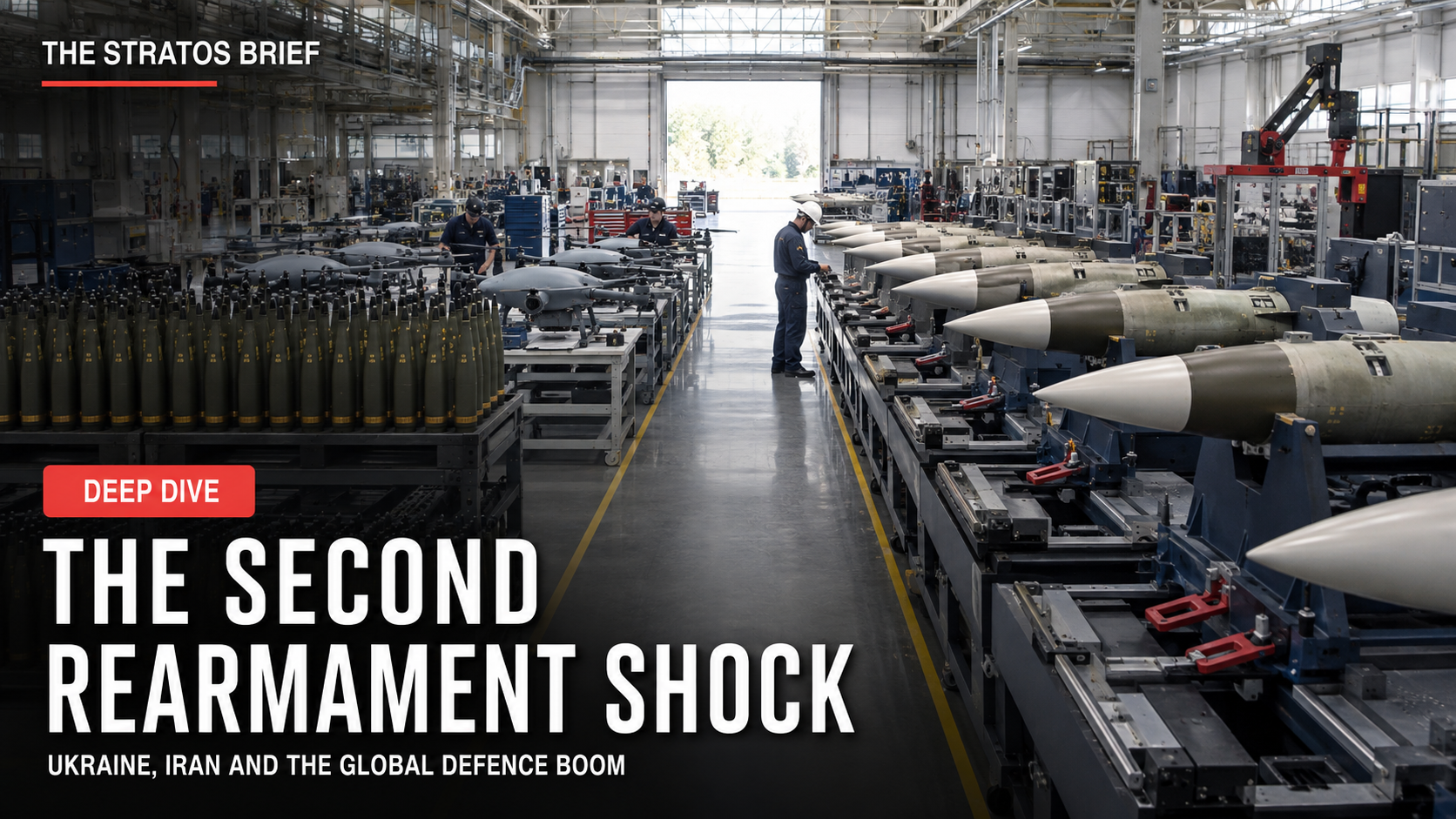
The Rearmament Economy: Who Builds, Who Buys—and Who Pays?
Russia’s full-scale invasion of Ukraine brought industrial-scale attrition back to Europe. The 2026 conflict with Iran is now straining high-end missile and interceptor inventories. This Deep Dive follows the new defence boom from government budgets to factory floors, examining who benefits, who pays and why its largest industrial effects may still lie ahead.
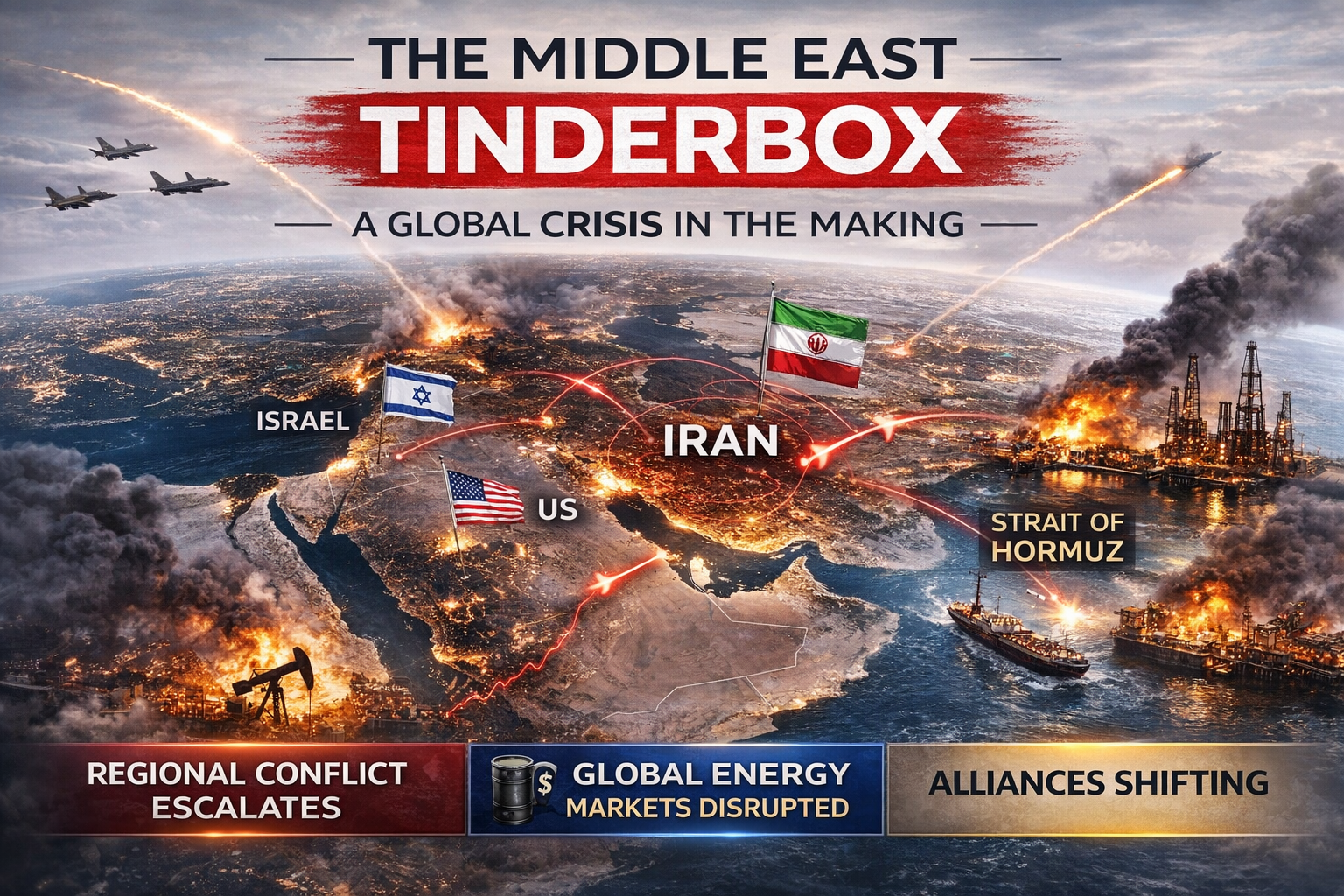
The Middle‑East Tinderbox: Iran, the US, Israel and the Return of Great‑Power War
Swarms of cheap drones and mass missile barrages are rewriting the rules of air defense. When attacks come in the hundreds, the decisive variable is no longer just interceptor performance, but the economics of sustaining fire night after night. This is where high energy lasers are moving from promise to procurement. A laser does not run out of missiles. It runs on power, cooling, and line of sight.
Laser air defense is not a silver bullet, and it is not a distant concept anymore. Several systems are already moving into operational service, while others are in late stage trials on land vehicles and warships. The technology is also maturing fast: power levels are climbing, beam control and tracking are improving, and integration into existing air defense networks is becoming standard. At the same time, the constraints are real. Weather, dwell time, target hardening, and the challenge of defending against complex, mixed salvos mean lasers will complement interceptors rather than replace them.
The current escalation between Iran, the United States, and Israel marks a decisive break from decades of managed confrontation.
The conflict has evolved from shadow warfare into a multi-domain regional war—spanning missile exchanges, energy infrastructure targeting, and strategic maritime disruption.
Its implications extend far beyond the battlefield:
The collapse of Gulf neutrality is accelerating coalition dynamics
Energy markets are once again exposed to geopolitical chokepoints
Europe faces renewed structural vulnerability
Russia and China are recalibrating through strategic distance
The outcome will shape not only the Middle East, but the future architecture of global power.